
ASO Education Center Wins AIA AR Member Choice Award
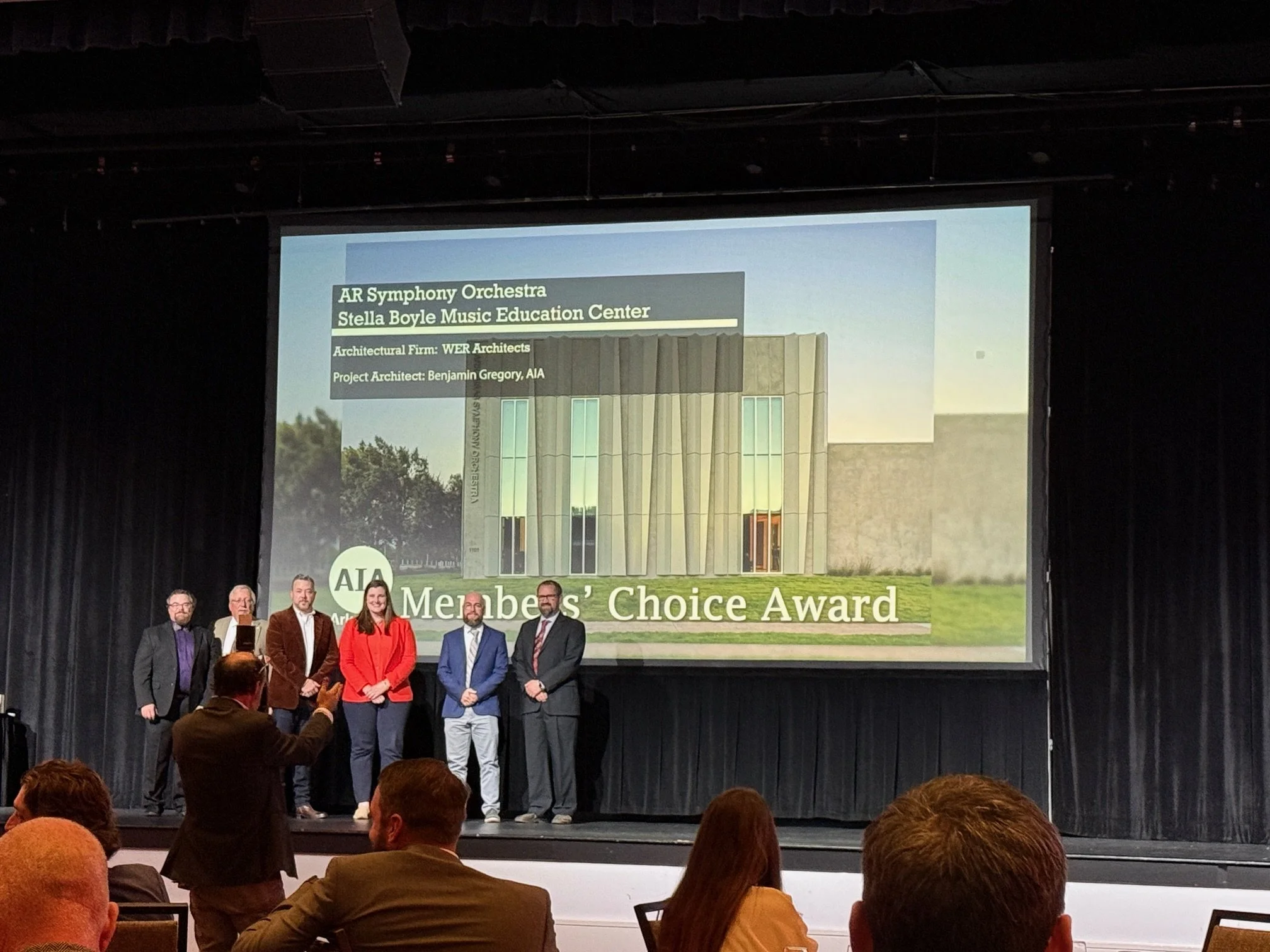
We are thrilled to announce that the Arkansas Symphony Orchestra Stella Boyle Smith Education Center has been awarded this year’s AIA Arkansas Member’s Choice Award! This was an incredibly rewarding project for our firm to be a part of and are so grateful for the recognition from our peers!
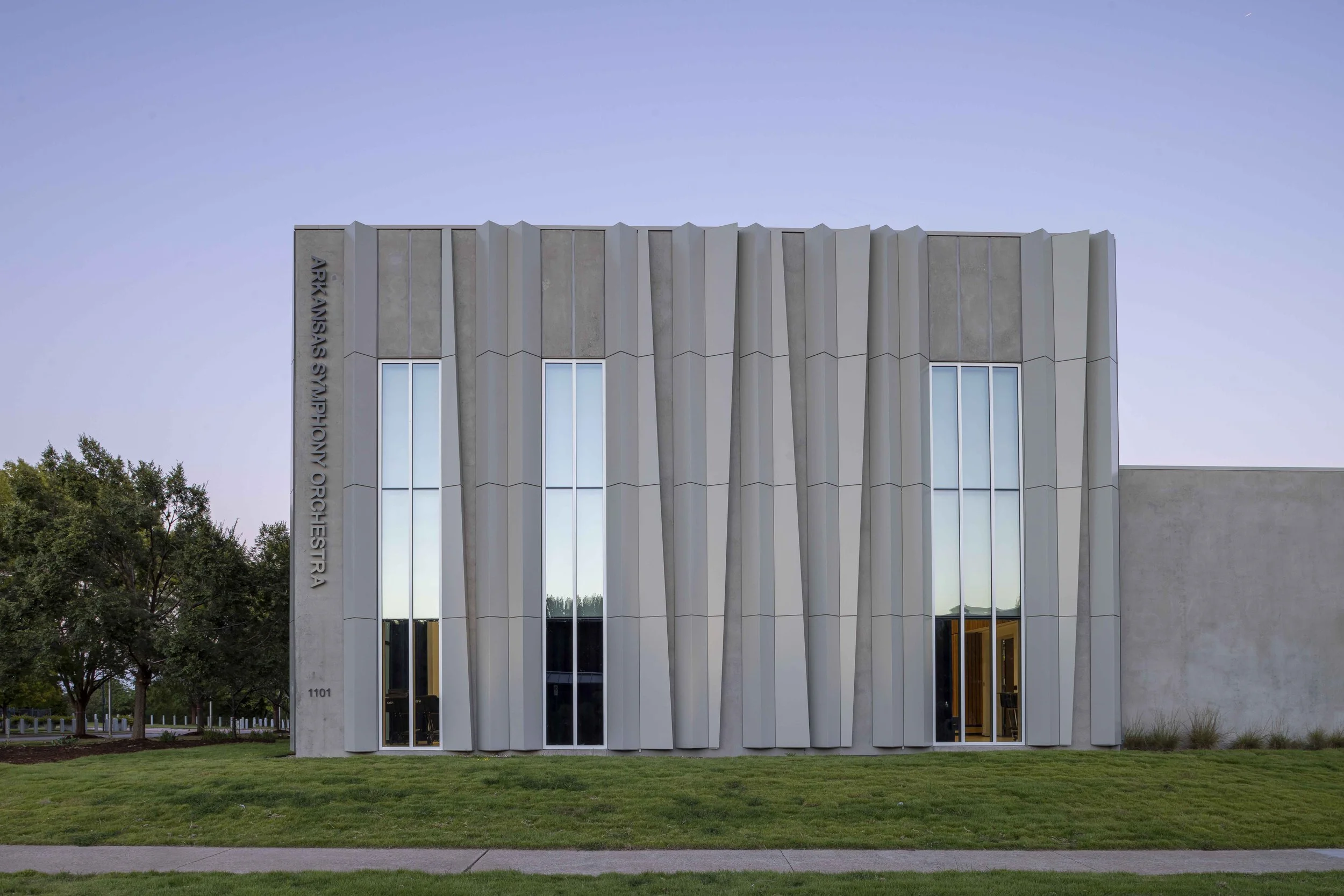


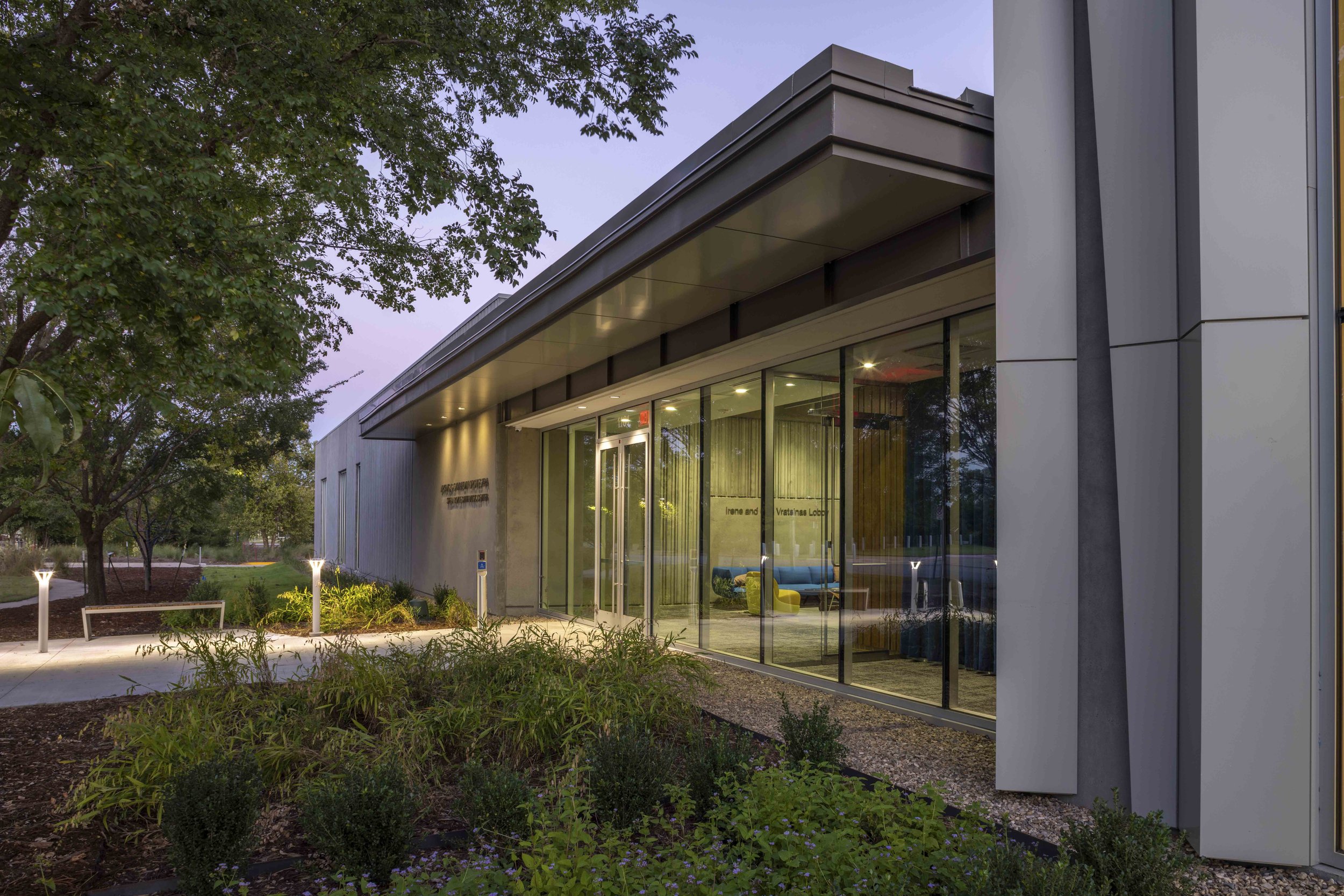
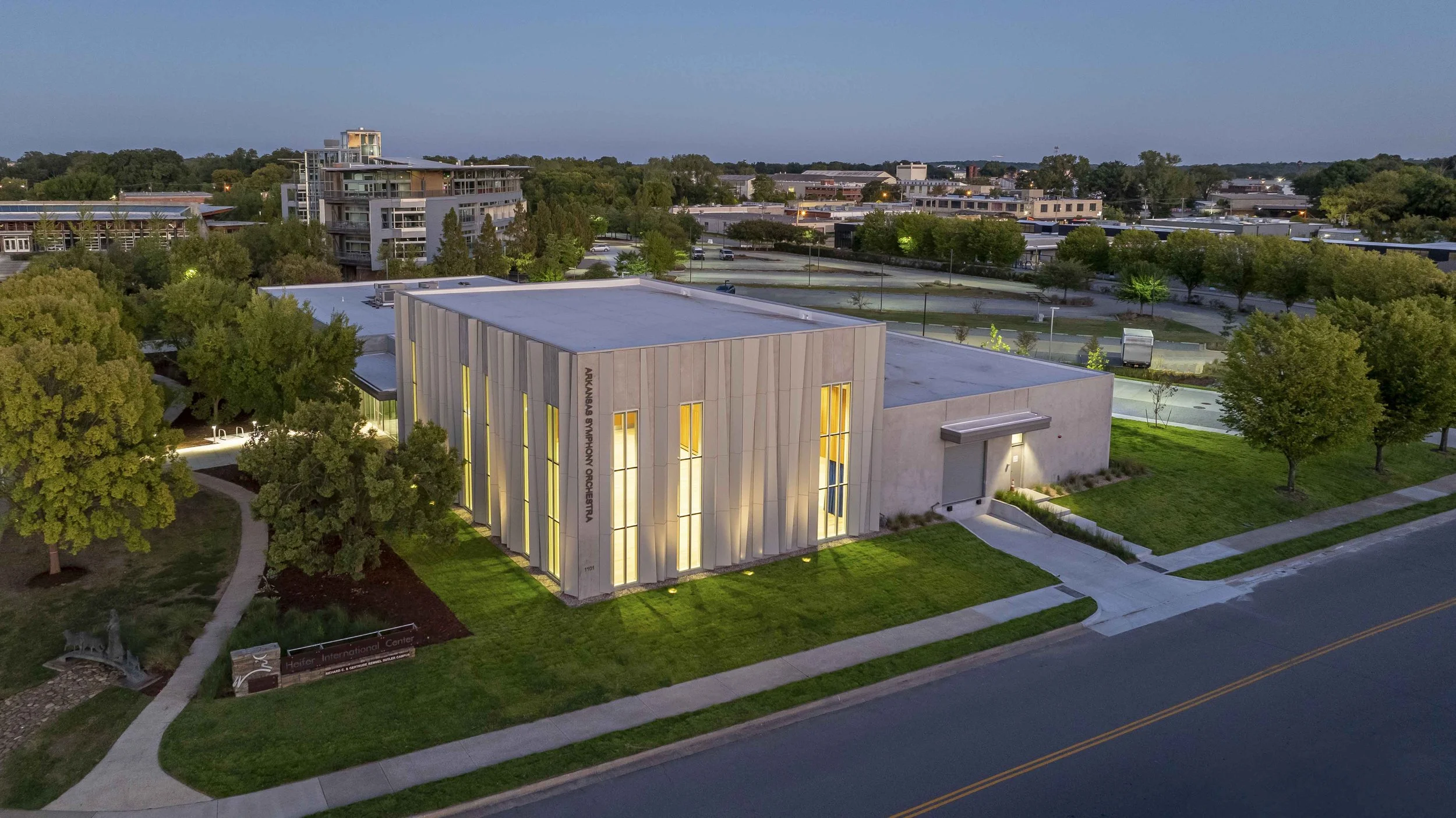
The Arkansas Symphony Orchestra recently completed its new Stella Boyle Smith Music Center in Little Rock’s East Village, creating a first-of-its-kind music-focused headquarters for the state. The new state-of-the-art facility is the Symphony’s first permanent home in its 58-year history.
This facility has few precedents, presenting both the greatest challenge and the biggest opportunity in its conception. There are no other symphonies in the United States that have a dedicated educational building, performance hall and corporate office all under one roof.
The main goal for this facility was to design a welcoming environment that fosters creativity, wellness, collaboration and community. The multi-use spaces needed to cater to all ages and demographics. The building provides access to music education, music performances, and music making to residents of all corners of the state through practice and performance spaces and a broadcast and recording studio.
Sitting in an industrial cove, east of Interstate 30, the exterior is economically constructed of flat and ribbed tilt up concrete walls and curtainwall. The building is formed by three concrete boxes – the tallest, positioned at the corner of 3rd and World Ave, is the performance hall. The second, to the south of this, houses the support spaces for the building. The third, located opposite these, houses the music classrooms and office spaces. The space between is the Lobby, the central entrance and organizing space for all the functions of the building.
The building design takes inspiration from both the physical and ethereal aspects of music performance. The primary design motif is the curtain. The exterior of the performance hall is draped in tessellated metal panels, approximating the geometries of a stage curtain, with openings between panels that allow passers-by glimpses into the activities of the hall. The restrained material palette of concrete, glass, wood and fabric balance needs of elegance and durability, and provide legibility for use and orientation in the space. All spaces where music is performed are clad in cherry batons, the tone reminiscent of stringed instrument bodies, and laid out in a syncopated pattern reflective of rhythms and time signatures in music. A similar patterning is incorporated into formed panels of the concrete structure, both in the interior and the exterior. The walls of these spaces are carefully angled and sculpted to avoid parallel walls and enhance room acoustics. Glass plays an important role on the exterior, to bring in natural light and provide connecting views between inside and outside. Additionally, interior glass connects spaces, like the Lobby to the recording studio and the office suite. Fabric, in most spaces a deep blue color in the form of acoustic curtains, furniture fabric and carpet, plays a roll in both visually and acoustically softening the harder, more durable materials, and providing an accent of color.
The Lobby is the central space of the facility – it’s the connective tissue between practice spaces, performance spaces, visitors spaces, and office spaces. It is designed to serve as a quiet waiting area for parents, a pre-function space for event, a durable lounge for hundreds of students to enjoy during weekend practices, recitals and auditions. Its also designed to allow for small performances, with a more acoustically lively end toward the south entrance which houses a baby grand piano.
The main Performance Hall was designed as a multipurpose space, to accommodate rehearsals of the professional symphony, recitals for youth orchestra ensembles, concerts for small visiting ensembles with 250 to 300 attending audience members, dinner and reception space, supported by and adjacent catering kitchen, for fundraisers and events, and meeting spaces for board meetings or rental. Acoustically, the space needed to accommodate all these modes, the primary means being retractable variable-acoustic curtains at the exterior walls, a tessellated ceiling treatment and walls design to balance acoustic modes.
A supporting cast of spaces, in the form of instrument storage, instruction and practice rooms, and office space fill out the rest of the building’s footprint, and are all easily accessible from the central Lobby. The result is an incredibly dense, rich series of spaces, that can take on many modes of use and operation, and that, through careful, deliberate design, work together for form a symphony of program befitting the vast aspirations and goals of the Arkansas Symphony Orchestra.